Commercial & Work Trucks
Turn a Work Truck Into a 2026 Tax Deduction
Qualifying Ford work trucks, cargo vans and chassis cabs may be deductible in full on this year’s return if they’re bought and working before December 31. Tell us what you need and we’ll tell you what we can have ready in time.
Section 179 at a Glance
|
Deadline |
December 31, 2026 |
|
Weight threshold |
Over 6,000 lbs GVWR |
|
Business use requirement |
More than 50% |
|
Bodies and upfits |
Installed, not just ordered |
This page is general information, not tax advice. Talk to your tax professional about your own situation before you buy.
What Is Section 179?
Section 179 is a section of the IRS tax code that may allow a business to deduct the cost of a qualifying vehicle in the year it is purchased and placed into service, rather than depreciating it over several years. For many work trucks and cargo vans, that can mean writing off up to 100% of the purchase price on this year’s return.
2026 Section 179 Deduction Limits
|
2026 deduction limit |
$2,560,000 |
|
2026 spending cap |
$4,090,000 |
|
2026 bonus depreciation (federal) |
100% |
For Georgia businesses: Georgia follows the federal Section 179 deduction but not federal bonus depreciation, which is added back on the Georgia return. Section 179 on its own usually covers the full price of a work truck, so most buyers see the same result either way.
Figures from IRS Revenue Procedure 2025-32. Section 179 and placed-in-service rules per IRS Publication 946. Bonus depreciation per IRS Notice 2026-11. Updated for the 2026 tax year.
What Ford Vehicles Are Eligible for Section 179?
Eligibility depends largely on the vehicle’s gross vehicle weight rating, and for pickups, the length of the bed. The weight rating is listed as GVWR on the sticker inside the driver’s door.
Up to 100% in the first year
F-250 and F-350 Super Duty · F-450, F-550, F-600, cab chassis and box trucks · F-150 with the 6¾-ft or 8-ft bed · Transit-150, Transit-250 and Transit-350 cargo vans.
Vehicles over 14,000 lbs GVWR, pickups over 6,000 lbs GVWR with a bed of at least 6 feet, and cargo vans with no seating behind the driver are not subject to the per-vehicle cap below.
Up to $32,000 in the first year
F-150 SuperCrew with the 5½-ft bed · Expedition · other vehicles 6,000–14,000 lbs GVWR
Vehicles in this weight range that don’t meet the bed-length or cargo-van test are capped at $32,000 for 2026.
Smaller first-year amounts
Vehicles under 6,000 lbs GVWR
Standard passenger-vehicle depreciation limits apply.
Section 179 Requirements
- Purchased, delivered and placed into service before December 31, 2026. “Placed into service” means the vehicle is ready for its intended use, not simply purchased.
- Used more than 50% for business. The deduction is reduced to the percentage of business use.
- Owned and used by the business claiming the deduction. How that works depends on how your business is structured — your tax professional can confirm.
- Records kept of how the vehicle is used.
Work Trucks That Qualify, In Stock Now
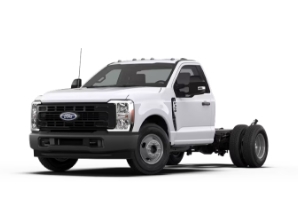
Up to 100%
2026 F-350 Chassis Cab
GVWR 14,000 lb · ready to upfit
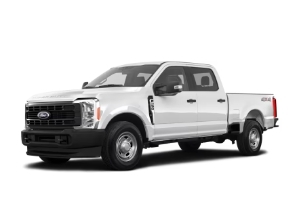
Up to 100%
2026 F-250 XL Crew Cab
GVWR 10,000 lb · 6¾-ft bed

Up to 100%
2026 Transit-350 Cargo
No seating behind the driver
Eligibility depends on the vehicle’s configuration and how your business uses it. Your tax professional can confirm what applies to you.
2026 Section 179 FAQs
If your business purchases a qualifying truck, places it into service before December 31, 2026, and uses it more than 50% for business, you may be able to deduct some or all of the purchase price on this year’s return. Your tax professional can confirm what applies to your business.
F-250 and F-350 Super Duty trucks are over 6,000 lbs GVWR, and with the 6¾-ft or 8-ft bed they are not subject to the $32,000 per-vehicle cap. F-450 and above are over 14,000 lbs GVWR and carry no per-vehicle cap.
Yes. Contractors, landscapers, plumbers, electricians and fleets are among the most common users of the deduction.
It can. The vehicle counts once it’s ready for its intended use, so a body or upfit needs to be installed before December 31 rather than just ordered. How long that takes depends on the body and the upfitter’s schedule, so it’s worth asking us early.
For vehicles, yes — Georgia follows the federal Section 179 deduction. Georgia does not follow federal bonus depreciation, so that portion is added back on the Georgia return. Section 179 on its own usually covers the full purchase price of a work truck, so most buyers see the same result either way.
Then it isn’t placed into service in 2026 and would fall into next tax year.
Talk to Our Commercial Team in Cumming, GA
Billy Howell Ford Lincoln is a Ford Commercial Vehicle Center serving contractors, fleets and businesses across Forsyth County and North Atlanta since 1977. Tell us what the truck has to do and we’ll tell you what we can have ready in time.
Contact the commercial team
This page is not tax advice. The information here is general, is accurate as of the publishing date, and is provided as a courtesy to business customers. Billy Howell Ford Lincoln is not a tax advisor and does not provide tax, legal or accounting advice. Eligibility, deduction limits, phase-outs and state treatment depend on your business, your taxable income and how the vehicle is used. Please consult your own tax professional before purchasing.